Skip to content

Hwyl Fawr!

March 3, 2011

So long, and thanks for all the fish.

To be hopeful in bad times is not just foolishly romantic. It is based on the fact that human history is a history not only of cruelty but also of compassion, sacrifice, courage, kindness. What we choose to emphasize in this complex history will determine our lives. If we see only the worst, it destroys our capacity to do something.

If we remember those times and places—and there are so many—where people have behaved magnificently, this gives us the energy to act, and at least the possibility of sending this spinning top of a world in a different direction.

And if we do act, in however small a way, we don’t have to wait for some grand utopian future. The future is an infinite succession of presents, and to live now as we think human beings should live, in defiance of all that is bad around us, is itself a marvelous victory.
Howard Zinn

A Week in Links #16

June 28, 2011
  • Brandon Voss speaks to artist Margo Selski about her new series of paintings featuring her son and discusses his unusual upbringing.
  • Andrea Levy wins the Walter Scott Prize for The Long Song (still on my leaning tower of to-read books).

A Week in Links #15

June 15, 2011
  • Sara McGrath explains Unschooling – educating without ‘manipulating or threatening them [children] into learning and doing things.’
  • Cynthia Gorney’s Too Young to Wed -The secret world of child brides which continues despite legislation banning it, simply because these girls don’t matter in this world.  Their mothers didn’t matter and neither will their daughters or grand-daughters.
  • John Vidal and Claire Provost report on how American universities are colonising Africa.
  • Mala Sen Obituaries from the Guardian and the Telegraph.  Neither particularly great, I’ll look out for a better one.
  • Lynsey Hanley reviews Owen Jones’ Chavs: The Demonization of the Working Class.  Definitely on my to look out for in charity shops list.

  • GUN – A blog dedicated to ‘dedicated to my beloved Stitch and Scrump’.  I love it and so do the various Stitches sitting next to my screen.

Easiest choice of beautiful music ever – the magnificent Pulp.

Recorded live off the TV, just as it should be :) Read more…

Do you actually have a job? I think not. You pay for all your things from MY tax.

June 14, 2011

‘Do you actually have a job? I think not. You pay for all your things from MY tax.’  was messaged to me on Facebook last week in response to me questioning a comment about reducing foreign aid.  It’s ok though, everyone hates people on welfare.  It’s expected, especially by politicians who have legitimised and revelled in the hate speech against us for many many years .  Thing is though, we are paying for the recovery:

Poor people in Britain are suffering from a far higher inflation rate than the rich, according to research released today by the Institute for Fiscal Studies (IFS) that shows the impact of soaring food and energy bills on those with the lowest incomes.

The thinktank said the least well off had experienced a higher cost of living than the wealthy for the past decade, but that the difference had widened sharply since the long, deep recession of 2008 and 2009.

In a study that coincides with the release of new official data today, the IFS said its analysis using the retail prices index (RPI) showed that the poorest fifth of households had faced an inflation rate of 4.3% between 2008 and 2010, compared to 2.7% for the richest fifth of households. RPI inflation has continued to rise in 2011 and stood at 5.2% in April.

The study found that the doubling of energy prices over the past decade had disproportionately hurt poor households, which on average spend twice as much of their income on food and fuel than the better off (19.6% of income on food and 9.4% on domestic fuel, compared to 10.1% and 4.4% respectively for the richest 20%).

Pensioners, and in particular those dependant on state benefits, have been hard hit by the increase in oil and other commodity prices over the past three years. The inflation rate for a pensioner reliant on state benefits was 4.6% on average over the three years to 2010, compared to 4.3% for a pensioner not dependant on benefits, the IFS said.

It added that there was a similar pattern for those of working age, where the inflation rate between 2008 and 2010 for those on benefits was 4%, compared to 2.9% for those not dependant on benefits.

Well-off households were also the main beneficiaries of the Bank of England’s decision to slash interest rates from 5.5% to 0.5% in 2008-09 in an attempt to lift the economy out of a recession that reduced the UK’s national output by more than 6%.

The poorest 20% of households spend 1.7% of their budgets on mortgage interest payments, as opposed to 8.7% for rich households. Rich households also spend more of their income on leisure goods, where cheaper computers and mobile phones resulted in a sharp drop in prices of 23.8% between 2000 and 2010.

The IFS said official poverty and inequality figures in recent years had failed to pick up the way in which inflation was bearing down hardest on those with the lowest incomes.

“Over the past few years relative price changes have tended to hit poorer and older households harder,” said an IFS research economist, Peter Levell.

“Of course, this pattern may well change in the future, but it does mean that poorer households will have fared worse over the period of the recession than poverty and inequality statistics that don’t account for these differential inflation rates would suggest.”

The IFS said that in 2008 – a year when the price of crude oil peaked at $147 (£90) a barrel – the RPI rose by 4%, but fuel prices rose by 18.9%.

“This rise in energy costs added 1.8 percentage points to the average inflation rate experienced by the poorest 20% of households, but just 0.8 points to the rate experienced by the richest 20% in that year,” it said.

The thinktank said the department of energy and climate change predicted that fuel prices would continue to increase as a result of the trends in commodity prices and government policies designed to meet targets for use of renewable energy and to cut greenhouse gas emissions.

Milly and Ed Milband and the rest of you fuckers – whilst you live out your prejudices and make yourselves feel all good, we’re still human beings and we are paying for ALL YOUR THINGS.

Come to Ymuno – 1-3 July

June 8, 2011

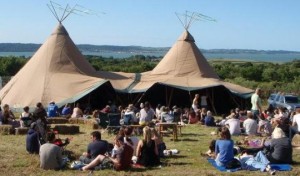
I’ve never slept in a tent, or been to a festival.  I have a feeling the former is going to be a horrible experience, but for the sake of the latter I am doing it a few times this year.  There are some wonderful little festivals all over the UK with some putting on many exciting things for kids as well as the staple music show.

Others  just look simply lovely and luckily one of those is fairly close to me -  Ymuno Festival in beautiful Abergele, North Wales.  Run by a cooperative not for profit gives the venture a good feel.   The ticket price includes folk, funk, camping and breakfast!  What more do you need?  Oh yeah, excellent vegy food from No Bones Jones and good company.

Ymuno is an intimate festival with tickets sales stopping at 450 and they’re selling fast, so you’ve not got long to go grab a ticket!  And you can come laugh at me learning the camping thing if you like.  I’m sure I’ll be laughing at myself in-between dancing to great music (or drunk in a corner somewhere).  Honeyfeet look particularly fun!

From the site: The word “ymuno” means “to join in” or “to be a part of” in Welsh, and was chosen by the organisers to fit in with the community based theme of the festival. – Byddaf gweld chi yno :)

Full line up here and an intro below to the lovely John Smith.  Enjoy.

Ymuno on Twitter and Facebook.

Free Ai Weiwei and where is our Weiwei?

June 6, 2011

I’d not heard of Ai Weiwei before his Sunflower Seeds show at London Tate.  Thanks to the Chinese authorities’ April 3 arrest and continued detention on convenient if not false allegations Weiwei’s name is everywhere.  He has yet to be charged.

Hari Kunzru wrote a wonderful article about Weiwei with much of it leading to deeper thought such as:

On his return to China in 1993, Ai brought with him a commitment to conceptualism, and a lofty notion of Modernism, which he saw as a kind of total interrogation of the human condition:

“Modernism has no need for various masks or titles; it is the primal creation of the enlightened, it is the ultimate consideration of the meaning of existence and the plight of reality, it is keeping tabs on society and does not cooperate. Enlightenment is attained through a process of self-recognition, attained through a teeming thirst for and pursuit of an inner world, attained through interminable doubts and puzzlement.”

The idea that the “pursuit of an inner world” is a primary artistic activity may seem banal to anyone who grew up with conventional western Romantic notions of art, but Ai has made it the foundation of his challenge to the Chinese state, which he accuses of producing “a society without citizens”. “A person with no true rights cannot have a complete sense of morality or humanity,” he wrote in 2008. “Freedom of expression is one of life’s basic rights . . . Modernity cannot exist without freedom of speech.” Ai’s connection of artistic Modernism to human rights and a kind of relentless questioning of the political, social and psychological status quo is arguably one of the most important developments in Chinese art since it opened up to the West at the end of the Cultural Revolution.

Art not of the regime can be dangerous to political regimes, indeed it should be.  Performing arts can convey deep truths that ruling classes would rather keep confused and regulated and beyond desire or pocket to the majority of us plebs.  We keep ourselves busy arguing whether ITV ‘talent’ shows are fixed or not.  It’s not accidental.

More information:  Free Ai Weiwei is an information hub on news and events related to the detention of Chinese artist/architect/social commentator, Ai Weiwei. Follow us @freeaiww and on Facebook.  Edit – also Aiww English (beta) twitter account and Ai Weiwei: Never Sorry A Film & Video project in New York, NY by Alison Klayman

Also see:

Art Uncut  Artists and Musicians Against The Cuts (which for the moment hasn’t established itself into any kind of force)

Mark Thomas

What political theatre ought to be – Francis Beckett

Banned & Dangerous Art

Please add anything else relevant in the comments, especially UK related and active.

A Week in Links #14

June 5, 2011

Nushin Arbabzadah writes of how Afghanistan almost celebrated gay pride.

The NYT hosted a series of posts by people who have ‘come out’ including beautiful stories by Anonymous, 21 years old, Waco, Tex. and Ollie, 20 years old, London Of course, if we didn’t place expectations on our children that they would be cis and straight then all our children would have to ‘come out’, or not, and it would be a normal part of life.

Beirut Boy turned 1 this week!

Festival Kidz have plotted all the best kid friendly festivals onto a map and also a calendar. Really handy resource and a great little site too.

Annie Lennox interviewed by Samira Shackle.  Life as a game of snakes and ladders is spot on.

Very funny column from Tim Dowling on writing and smart alec kids.

Andy Worthington has updated his hugely important archive: Guantánamo: The Definitive Prisoner List — Updated for 2011, With New Information and Photos from WikiLeaks

Iman Qureshi reviews Granta 115: The F Word for The F-Word.  Anything that mixes the unreadable Rachel Cusk, the unreadable A.S. Byatt (excepting the short stories) and the unreadable Jeanette Winterson is always going to be full of win.  Not.

Chewbacca riding a giant Squirrel, fighting Nazi’s

The entirely terrible Betsi Cadwaladr University Health Board is named after a Welsh nurse, who served in the Crimea.  Plans are underway to make a permanent memorial, 151 years after her death.

Now for something entirely lovely – H/T to @IanPlaysMusic for introducing me to a whole new genre of music which can be (very ) broadly called Disney Dub.  I love it :)

Flibbertigibbets

June 5, 2011

Via Salt Publishing / @saltpublishing

IN THE LAND OF THE FLIBBERTIGIBBETS
In the land of the Flibbertigibbets,
The Curlybirds whirl and whiz,
The Googlies giggle, the Rampoons wriggle
And the Furzles flitter and fizz,
         The Furzles flitter and fizz.

In the land of the Flibbertigibbets,
The Humdrums simper and sing,
The Bamboozles bump, the Jamborees jump
And the Plimpets zip and ping,
         The Plimpets zip and ping.
In the land of the Flibbertigibbets,
The Dobblers dibble and dive,
The Clutters clatter, the Chitters chatter,
And the Junkets jiggle and jive,
        The Junkets jiggle and jive.

John Foster

See also Spike Milligan’s The Ning Nang Nong (video).  Barbara Streisand’s The Owl and the Pussycat (video)

And obviously Lewis Carroll’s Jaberwocky done by muppets! Read more…

Follow

Get every new post delivered to your Inbox.